

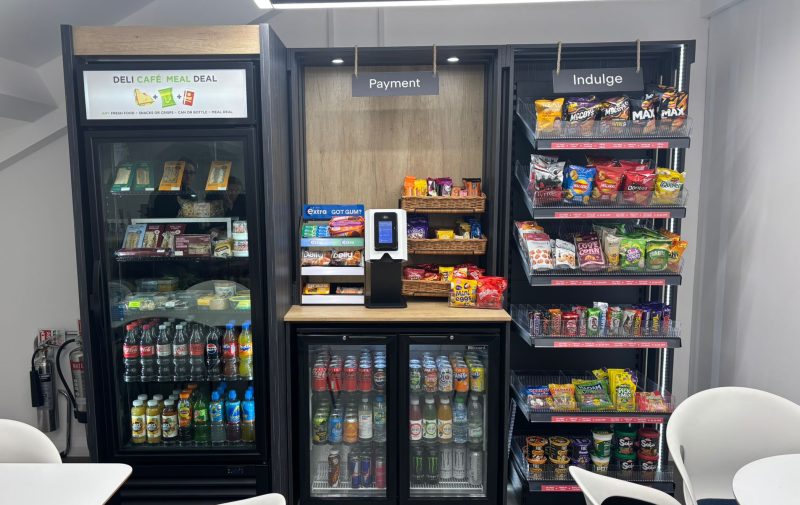
ESG goals are getting harder to hit and the pressure to demonstrate measurable results is rising. Businesses are scrutinising every area of their operations, but there is one area that is often overlooked: their food and beverage solutions. The choice between a traditional canteen and a micro market is not just operational, it has a direct impact on the workplace’s energy use, food waste and supply chain accountability.
Energy: The hidden cost of running a canteen
Traditional canteens run commercial kitchen equipment continuously, regardless of actual footfall. In a hybrid working environment, that is an expensive baseline for minimal return. Micro markets are equipped with low-voltage coffee machines with smart standby modes that adjust to real usage patterns, consuming on average 20–30% less energy than a canteen.
Food waste: The hidden ESG metric
Food waste is the most scrutinised ESG metric, and it is surprising how fast it can build up if not managed correctly. Canteens prepare food in bulk with limited demand visibility, resulting in average waste rates of 17–18%, whereas micro markets use telemetry to track sales in real time, resulting in an average waste result of 7–8%.
Vending providers often offer waste management schemes which include working with local charities to donate food to the community, resulting in 0% waste produced from a micro market. Since most food donation charities only accept packaged food with clear expiry dates, it is rarely possible for canteens to use this approach.
Supply chain: Accountability you can report
Micro markets give operators direct control over product selection, so Fairtrade and Rainforest Alliance certified suppliers and plant-based ranges can all be prioritised without disrupting operations. Unlike fixed canteen supplier contracts, these choices are configurable from day one and trackable against specific supply chain KPIs.